













The Month in Review - January 2026
Monthly Review
Farrow Hughes Mulcahy Investment Research 10 February 2026

January was characterised by heightened geopolitical tensions and US policy uncertainty, yet global share markets still advanced in USD terms.
In AUD terms, the global shares index fell 2.75 per cent for the month. Global economic conditions remain supportive, with resilient growth, moderating inflation, and pro-growth policy across major regions. Market leadership broadened beyond the Magnificent 7, with small caps and emerging markets outperforming.
The Australian share market began the year on a strong footing, supported by rising commodity prices. Australian shares gained 1.8 per cent for the month, while the materials sector rose 9.5 per cent as gold, copper and other base metals rallied.
Global Bond markets softened as yields drifted higher, reflecting a reassessment of the growth–inflation mix and reduced conviction in near-term easing. Domestic fixed interest markets were shaped by the continued repricing of inflation risk and monetary policy expectations. Persistent upside inflation surprises, including 3.4% annual core CPI (trimmed mean) and firmer domestic demand, set the stage for the RBA’s cash rate increase to 3.85% in early February.
The past week saw another tech scare this time with concern that AI will automate a lot of software companies out of business following Anthropic’s Claude replicating legal software. It could just be another brief scare like that around DeepSeek a year ago – but disruption from AI will be huge and an outworking could be a dramatically shrunken tech sector. This is also occurring at a time when investors are concerned that big tech companies may be over investing in AI related data centres and so despite strong earnings results from companies like Microsoft, Alphabet and Amazon their shares fell on concerns about their big capex plans. At its core are worries that tech sector valuations are excessive. Of course, for non-tech it could turn out to be a bonanza in terms of savings and on this front it’s noteworthy that the equal weighted US S&P 500 index (+5.5% year to date) is way outperforming the market cap weighted index (+1.3% year to date) as investors rotate away from tech.
So far nearly 60% of S&P 500 companies have reported December quarter earnings, with 79.4% beating expectations, above the norm of 76.6%. Consensus earnings expectations have increased to 11.8% YoY but are likely to come in around 12.5% allowing for normal beats. Tech is leading the charge again with earnings up 26% YoY, financials up 12% YoY and materials up 9% YoY. While tech earnings have been strong again there is increasing concern that they are overinvesting in data centres and the like.
Overall, our view remains that this year will see a volatile ride for investors on the back of geopolitical threats, Trump bluster, the US midterm election, interest rate uncertainty and worries around an AI bubble and wider tech issues. High and still rising investor optimism points to a high risk of a decent pull back in shares at some point. So, we still see another 15% or so correction sometime in the next six months.
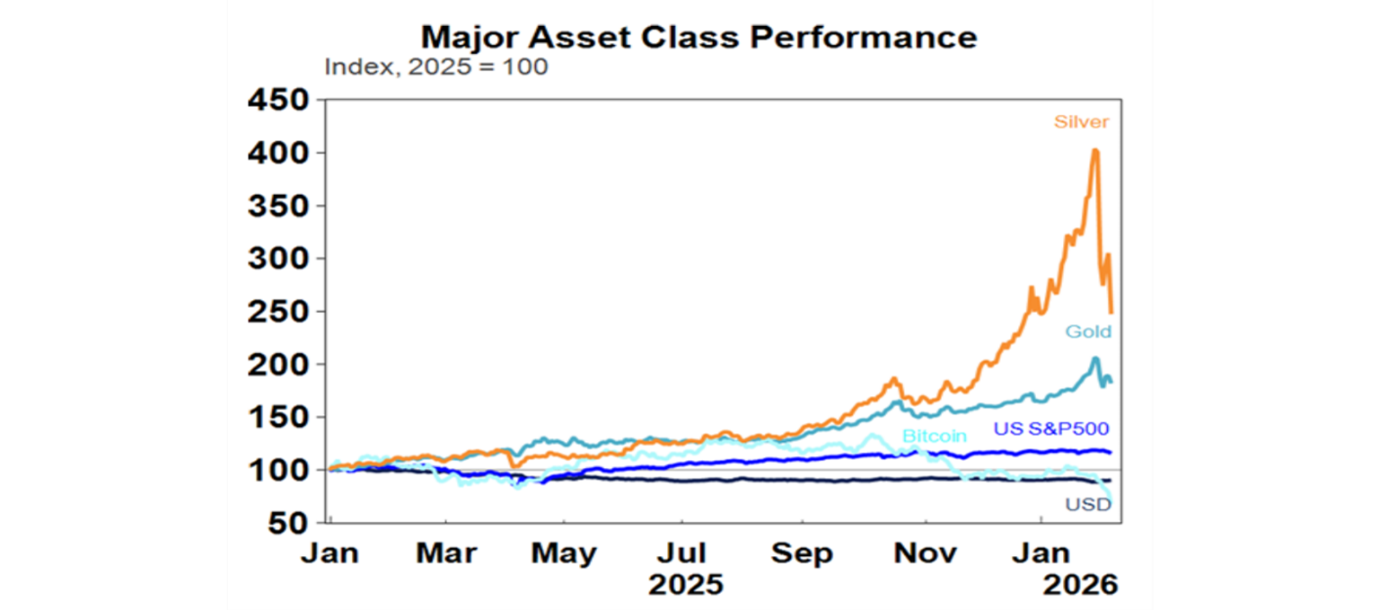
But ultimately, we see it turning out okay for shares this year with reasonable returns on the back of good global economic and profit growth, Trump focussing on policies to help US households ahead of the midterms, the Fed cutting rates once or twice more, and profit growth turning positive in Australia. At the same time the US dollar is likely to remain in a downtrend as Trump’s policies continue to dent US exceptionalism and safe havens like gold are likely to trend higher as investors seek out a hedge to protect against risks around geopolitical conflict, high public debt levels and the threat to Fed independence. This will likely see ongoing strength in the Australian dollar.
**Important Note**
While every care has been taken in preparing this document, Farrow Hughes Mulcahy makes no representations or warranties as to its accuracy or completeness, including forecasts. Past performance is not a reliable indicator of future performance. This document provides general information only and does not consider individual objectives or financial situations. Professional advice should be sought before making investment decisions.
Source: AMP Capital, Zenith, Pendal.
